
The INNCOM product lines explained: Direct, e-Series, e7, Evora, and Modeva — which tier fits your property?
If you've started researching Honeywell INNCOM for your hotel, you've probably hit the same wall most owners do: the catalog is deep, the product names are terse (e528, D578, K594.RF), and nothing on the page tells you which parts belong together or which tier your property actually needs.
This guide is the map: the INNCOM lineup as a ladder, from the self-install entry tier to the luxury design tier, the way we'd sketch it for an owner or chief engineer. Howe Sound Solutions is a Canadian Honeywell INNCOM Authorized Service Integrator; we install, commission, and service every tier here, and this framing reflects what we see in Canadian hotels. For proprietary depth, confirm with your INNCOM documentation or an ASI.
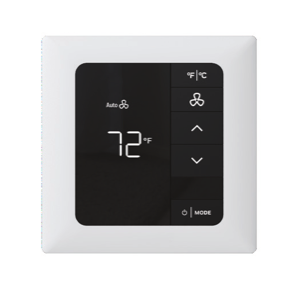
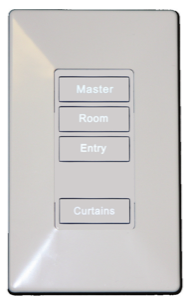
One platform, four tiers
Read the INNCOM catalog not as forty-some products but as one guestroom platform offered at four levels of ambition:
- INNCOM Direct — the entry tier, engineered so a property's own team can install it.
- e-Series (e527/e528/e529) — the established core, with an enormous installed base.
- e7 / e7w — the current-generation flagship thermostats.
- MODEVA — the premium design tier for luxury properties.
Alongside the thermostat ladder sit two guest-facing device families — EVORA switches and the broader ELEMENTS range — and underneath everything runs a shared foundation: occupancy sensors, networking hardware, lighting and amenity control, INNcontrol analytics, and the iRiS guest app. Climb the ladder and the polish and integration depth increase; the energy-management logic stays recognizably the same.
That shared DNA means tiers mix: e7s in renovated suites, e528s in standard rooms, MODEVA on the club floor, all reporting to one head end. You're choosing a starting rung, not signing an exclusivity deal.
INNCOM Direct: the self-install entry tier
INNCOM Direct answers a real market gap: properties that want hotel-grade energy management but can't justify a full integrator-engineered project. The system is deliberately simplified so a capable maintenance team can put it in themselves. The core kit is small:
- D1 Thermostat — the room's brain. Like its bigger siblings, it hubs the room's energy management and handles essentially any guestroom HVAC equipment.
- Dx47 Universal Relay Pack — switching muscle at the equipment for loads the thermostat doesn't drive directly.
- D578 Edge Router — the network piece. Rooms join a mesh that organizes itself, making fast, low-drama setup possible without RF engineering.
- Direct IoT Gateway — a server appliance lifting the property's sensors and devices to the cloud for real-time monitoring and control.
Who it's for: economy and select-service properties, smaller independents, and owners who want occupancy-based HVAC savings this season, not after a capital planning cycle. On PTACs or simple fan coils, Direct delivers most of the energy story at the lowest barrier to entry.
Where self-install honestly stops being enough. Three situations reliably outgrow the do-it-yourself model. Scale — a 30-room mesh that "just works" behaves differently at 150 rooms across concrete floors, and RF layout becomes an engineering task. Integration — PMS-driven behaviour, door-lock occupancy logic, or brand-standard reporting means commissioning work. And mechanical complexity — heat pumps with auxiliary stages, modulating valves, mixed equipment across room types. None of that means Direct was the wrong buy; it means the property matured. HSS regularly picks up Direct installations at exactly that point — tightening the network, fixing configuration drift, and mapping an upgrade path onto the higher tiers without discarding what's on the wall.
e-Series (e527, e528, e529): the established core
The e-Series is the INNCOM most of the industry knows: decades of installed rooms, a familiar backlit-LCD interface, and a design philosophy of maximum flexibility. Each thermostat in the family — the e527, the e528, and the battery-powered wireless e529 — works as a full hub for guestroom automation, not just a temperature dial, built to run virtually any HVAC equipment found in a hotel room: two-pipe and four-pipe fan coils, PTACs, heat pumps.
The split inside the family is mostly about installation. The wired units adapt to a wide range of legacy wiring; the e529 runs on batteries and talks RF, pairing with control hardware at the equipment — the go-to answer when fishing wire through an occupied building is a non-starter. (We cover it in depth in our e529 thermostat guide.)
Who it's for: properties already running e-Series estates (keep rooms uniform, service what works), retrofits where wiring realities dominate, and owners who want proven hotel-grade EMS without current-generation aesthetics. This tier is integrator territory: engineered networks, commissioned occupancy logic, INNcontrol at the head end.
e7 and e7w: the current flagship
The e7 family is where Honeywell's current investment lives: a redesigned, modern-looking thermostat focused on guest comfort and in-room energy reduction, with a wired e7 and a battery-powered wireless e7w. Functionally it plays the same role as the e-Series — room brain, EMS controller, ecosystem hub — with current-generation guest experience and more connectivity headroom.
For a new build, a gut renovation, or a brand standard that cares how the wall looks, the e7 is the default specification. For the full head-to-head, see INNCOM e7 vs e528. The short version: choose the e7 when you control the wiring and want the longest runway; stay within the e-Series when uniformity with an existing estate or a wiring constraint drives the decision.
MODEVA: the premium design tier
MODEVA is the platform aimed at luxury. The MODEVA thermostat and its matching switch family present a capacitive-touch interface — no buttons, no visible seams — built to be configured and customized to a property's design language rather than the other way around. Where the e7 is a handsome standard product, MODEVA is closer to a design element that happens to run the room.
That customizability is the point and the commitment: the interior designer gets a say in the control surfaces, and the same flexibility means MODEVA projects are specified, engineered, and commissioned as bespoke work, often paired with door-chime annunciation and the deeper amenity integrations.
Who it's for: luxury and upper-upscale properties, signature floors, and new builds where guestroom experience is a brand differentiator worth engineering for.
EVORA switches and ELEMENTS: the guest-facing layer
Two more names round out the lineup, sitting beside the thermostat ladder rather than on it.
EVORA is a family of elegantly styled wall switches that bring lighting and scene control into the same automation fabric as the thermostat — the mid-to-upper-tier answer for making the light switch part of the room system where full MODEVA customization isn't in the budget or the design brief.
ELEMENTS is Honeywell's umbrella for the guest-facing device range as a whole: easy-to-use controls through which guests run comfort, lighting, drapes, and other amenities. Designing an integrated room means composing from this layer — switches, dimmers, drape control, annunciation — on top of whichever thermostat tier anchors it.
Rule of thumb: the thermostat tier sets the room's brain and budget class; EVORA and the ELEMENTS devices set how much of the room the guest can command.
The shared foundation every tier stands on
Whichever rung you choose, the same infrastructure families appear on the drawings — where much of the real value and service work lives.
- Occupancy sensing. The savings engine. PIR motion detectors like the K594.RF and the battery-powered K595.RF pair with the S241 magnetic door switch so the system can distinguish "guest left" from "guest asleep." Every tier runs on this logic.
- Network backbone. Edge routers and floor bridges carry room traffic to the head end — the B578 edge RF router on the mesh side, the B576 floor bridge for wired RS-485 segments of up to about 35 rooms, protocol converters bridging the two domains. When rooms go quiet in INNcontrol, this layer is where we look first — see our gateway and floor bridge troubleshooting guide.
- Lighting and amenity control. Relay packs, dimmers, lamp controllers, the X08 drape controller, and DALI lighting support — the components that turn "thermostat install" into "integrated guestroom."
- Head end and guest app. INNcontrol 5 gives engineering and ownership property-wide room analytics and energy management — the screen where every tier reports. The iRiS Guest Valet app puts thermostat, lighting, and drape control (plus privacy and make-up-room signalling) on the guest's phone.
- Interfaces to the mechanical world. Purpose-built pieces like the RTD-Linc, which ties Daikin VRV equipment into the room automation system over Modbus — worth knowing if your plant is heading toward VRF, a live question on many Canadian electrification projects.
One cold-climate note for every tier: in Canada, unoccupied setback strategy needs freeze-aware limits. Setbacks that are free money in a mild climate can put a fan coil room at risk in a Prince George February — configuration, not hardware, but it must be engineered deliberately.
The tier ladder at a glance
Our own summary — orientation, not a submittal:
| Tier | Install model | Guest-facing experience | Typical property |
|---|---|---|---|
| INNCOM Direct (D1, Dx47, D578, IoT Gateway) | Self-install; self-forming mesh, cloud monitoring | Functional thermostat; energy savings mostly invisible to guests | Economy / select-service, smaller independents |
| e-Series (e527/e528/e529) | Integrator-engineered; wired and wireless variants | Classic backlit LCD, proven and familiar | Mid-scale and full-service, large existing estates, retrofits |
| e7 / e7w | Integrator-engineered; wired or battery wireless | Modern minimal design, current-generation interface | Full-service, new builds, brand-standard renovations |
| MODEVA (+ EVORA / ELEMENTS devices) | Integrator-engineered, design-coordinated | Capacitive glass touch, customized to the property | Luxury, upper-upscale, signature floors |
What the table can't show: every row feeds the same INNcontrol head end, and rows combine freely on one property.
Matching the tier to your property
Economy and select-service. Start with Direct if your team can own the install; step to the e-Series when scale, integrations, or mechanical complexity call for engineered work. Either way, insist on real occupancy sensing — a thermostat without PIR and door logic leaves the savings on the table.
Full-service. The e7 family anchors renovations and new builds; existing e-Series estates are worth keeping uniform until the next reno cycle. Add EVORA switching where lighting control is part of the room story. (For what a GRMS buys you in Canada, see our GRMS 101 guide.)
Luxury. MODEVA, designed in from the start — control surfaces coordinated with the interior design, drapes and scenes engineered, iRiS on the guest's phone. This tier rewards early integrator involvement; retrofitting bespoke later is the expensive path.
New build vs retrofit. New construction favours the current generation (e7 or MODEVA) because you control wiring and wall locations. Occupied-building retrofits favour the wireless members of each family — e7w, e529 — and Direct's mesh kit exists precisely because retrofit wiring is painful.
Mixing tiers. Common and sane: MODEVA suites over e7 standard rooms; an e528 estate with e7s phasing in by floor; a Direct property adding engineered pieces as it grows. Just plan the mix so spares, training, and network design stay coherent.
FAQ
Is INNCOM Direct a "lesser" INNCOM? It's a simpler one, on purpose. The energy-management core — occupancy-based HVAC control, real-time monitoring — is genuinely there. The trade is integration depth and engineered scale, which the higher tiers add back.
Can I really install INNCOM Direct myself? That's the design intent: the D578's self-forming mesh and the small component set make it feasible for a competent maintenance team. When scale, integrations, or mixed mechanical equipment enter the picture, bring in an ASI — routine work for us.
Do the tiers work together on one property? Yes. Different thermostat families can serve different room classes and report to the same INNcontrol head end. Mixing is normal; the key is having one party engineer the network and keep configuration coherent.
Is MODEVA a thermostat or a whole system? Both, in a sense: it's a thermostat and switch family, but MODEVA projects are usually specified as an integrated, design-coordinated room — touch surfaces, lighting, drapes, chime, and app together.
Which tier saves the most energy? Savings come from occupancy logic — motion sensing plus door status, commissioned well — not from the tier. A well-configured Direct room can outperform a badly commissioned flagship room. Spend on commissioning before polish.
Who installs and services INNCOM in Canada? Honeywell INNCOM systems are deployed and serviced through Authorized Service Integrators. Howe Sound Solutions is a Canadian ASI covering every tier here — including Direct properties that self-installed and now want a pro.
Talk to Howe Sound Solutions
Choosing an INNCOM tier is really choosing an install model, a guest experience, and a ten-year platform plan — and the right rung differs between a 45-room independent on PTACs, a 250-room full-service renovation, and a luxury new build. Howe Sound Solutions is a Canadian Honeywell INNCOM Authorized Service Integrator: we design and commission e-Series, e7, and MODEVA projects, support and upgrade INNCOM Direct properties, and keep the shared foundation healthy across all of them. Not sure which tier fits? Contact Howe Sound Solutions and we'll map your property onto the ladder with you.
Related: INNCOM service in Canada · parts catalogue · customer platform · contact us